
By the Editorial Board, Friends of China in Somalia – FOCS
Recent global conflicts have sent shockwaves through food and energy markets, hitting African nations particularly hard. However, these challenges are coinciding with a strategic deepening of economic ties with China, which is starting to provide some much-needed relief and new opportunities
The first tankers that turned away from the Strait of Hormuz did not just redraw shipping maps. They redrew grocery lists, too. After disruptions at the chokepoint that carries roughly 20 percent of the world’s oil, traders priced in something they know too well: war is not only about missiles; it’s about the bill that lands on kitchen tables months later.
For much of Africa, specially Somalia that bill has become unpayable. Yet even as global conflict tightens its grip, a strategic pivot toward China is offering a vital—if complex—lifeline.
The war premium on everyday life
Brent crude climbing back above $100 a barrel—and touching roughly $120 on the worst days—is already more than a market headline. It affects the diesel at the pump, the bread in the oven, and the fertiliser on the field. For net importers such as Kenya, Senegal, or Somalia, every $10 rise in crude quickly narrows subsidy space, lifts freight costs, and hardens urban food inflation.
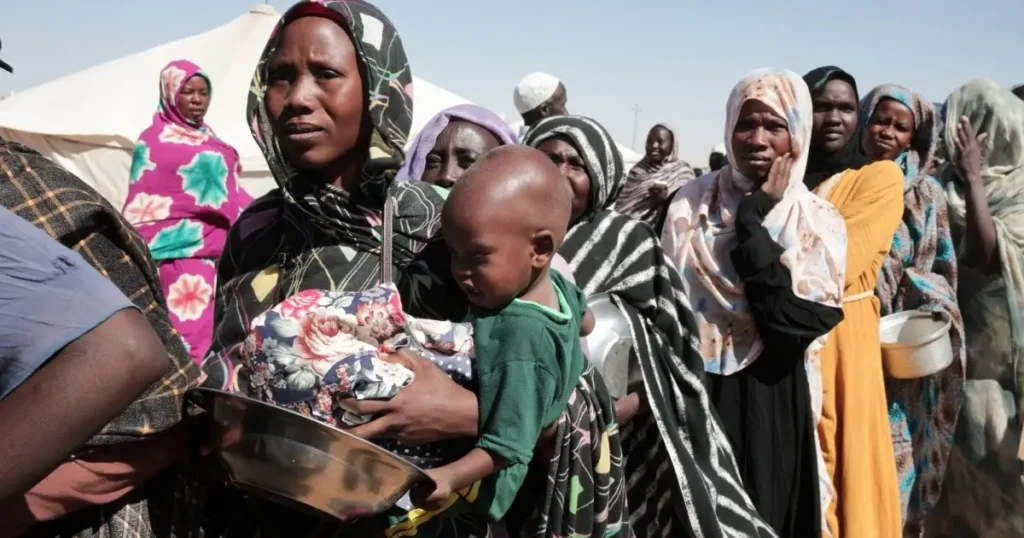
The Food and Agriculture Organisation’s global food price index rose for two consecutive months, with cereals and vegetable oils leading the rebound. But global averages hide the harsher story. In Somalia, Sudan, and across fragile stretches of the Sahel, staples can trade at levels that feel closer to siege economics than normal volatility.
The numbers are stark. The Horn of Africa imports up to 90 percent of its wheat from Russia and Ukraine. Since the war began, the price of a standard sack of wheat has risen from $300 in 2021 to between $900 and $1,200. Vegetable oil prices are up 65 percent, pasta by 80 percent, cooking gas by 55 percent. Across the region, petrol prices have more than doubled from pre-2021 levels, now ranging between $1.80 and $2.50 per liter.
The UN reports that over 20 million people across the Horn now face acute food insecurity, with some areas approaching famine-like conditions. Annual inflation in Ethiopia has reached 28 percent—the highest in three decades.
Against this backdrop, China has been deepening its agricultural and trade engagement with Africa in ways that are starting to provide meaningful relief.
A different kind of partnership
The most immediate move has been market access. Since May 2026, China has granted zero-tariff treatment to products from all 53 African countries that have diplomatic relations with Beijing—a policy that covers 100 percent of tariff lines. This followed the earlier expansion of “green lanes” for African agricultural imports, designed to speed up customs clearance and reduce trade costs.
The first shipments tell the story. South African apples and wine, Kenyan avocados and coffee, Somali livestocks and Egyptian oranges—all have arrived in Chinese ports under the new arrangements. For African exporters, this represents a new window of opportunity. As Chinese foreign ministry spokesperson Mao Ning put it, China is “happy to see more African quality and specialty products in the Chinese market”.
But trade is only one part of the equation. In June 2026, the China-Africa Agri-Tech and Industrial Cooperation Forum opened in Nairobi, bringing together more than 100 delegates to discuss agricultural modernization through innovation, technology transfer, and investment. Chinese Ambassador to Kenya Guo Haiyan noted that combining Africa’s rich agricultural resources with China’s development experience and technology could advance food security and shared prosperity.
There is also practical cooperation on the ground. Chinese hybrid rice has been introduced in more than 20 African countries. In Guinea, Chinese agricultural experts helped establish Africa’s largest hybrid rice demonstration park, where yields per season are three times higher than traditional local varieties. In Madagascar, rice imagery appears on the country’s highest-denomination banknote—a reference to the work of Yuan Longping’s team in improving yields and supporting food self-sufficiency.
The limits of the lifeline
Yet caution is warranted. While China’s deals offer breathing room, experts warn against simply swapping one dependency for another. African policymakers are increasingly focused on achieving genuine self-sufficiency in food and fertilizer—a goal that requires diversification, not just new trading partners.
Moreover, zero-tariff access is not a magic wand. As non-African observers have noted, “China opened a door. But a door is not a factory, not a corridor, not a testing lab, not trade finance, nor industrial policy”. The real challenges lie in standards, certification, traceability, logistics, and institutional readiness. Kenyan exporters, for example, are being trained to meet Chinese customs and phytosanitary requirements—an essential but costly step.
A strategic moment
There is also nuance in how the policy is understood. Some African consumers expect zero tariffs to mean cheaper Chinese goods entering their own markets, but the policy applies only to African exports to China—not the reverse. That gap between expectation and reality underscores the importance of managing perceptions alongside trade flows.
The war-driven spike in food and energy prices has exposed Africa’s structural vulnerabilities with brutal clarity. But it has also created a strategic opening. China’s willingness to offer market access, share agricultural technology, and invest in production capacity represents a departure from traditional aid models that often left African nations as passive recipients.
The real test will be whether African governments can use this breathing room to build genuine resilience—diversifying import sources, investing in domestic agriculture, strengthening social protection programs, and learning from external partners without becoming dependent on them.
As one observer noted, “international morality does not depend on resounding slogans… More often, it is embodied in a road, a bridge, a well, or a rice field—in the steady process of enabling people to live increasingly stable and prosperous lives from day to day”.
For now, the bag of hybrid rice from Guinea, the containers of Kenyan avocados arriving in Chinese ports, and the coffee beans from Ethiopia finding new buyers in China all point to the same possibility: that even in a world battered by war, cooperation can still make the grocery bill a little easier to bear.
Author : Yasin JAMA is a co-founder to Friends of China in Somalia and a researcher on Sino-African relations based in Mogadishu.


